I found or rediscovered a note on the side of my filing cabinet. I don't remember where it came from, the pages aren't curled yet and the paper has not turned yellow, so chances are I found it on Facebook. But for those writers struggling - something every writer does - this is for you.
These are not my words ... I'm simply sharing what I found ...
'Nobody tells this to people who are beginners: I WISH SOMEONE HAD TOLD ME.
All of us who do creative work, we get into it because we have good taste.
BUT THERE IS A GAP.
For the first couple years you make stuff, just not that good. It's trying to be good, it has potential, but it's not. But your taste,the thing that got you into the game, is still killer and your taste is why your work disappoints you.
A LOT OF PEOPLE NEVER GET PAST THIS PHASE, they quit.
Most people I know who do interesting, creative work went through years of this.
We know our work doesn't have this special thing that we want it to have.
WE ALL GO THROUGH THIS.
And if you are just starting out or you are still in this phase, you gotta know it's normal and the most important thing you can do is: DO A LOT OF WORK.
Put yourself on a deadline so that every week you will finish one story.
It's only by going through a volume of work that you will close that gap.
AND YOUR WORK WILL BE AS GOOD AS YOUR AMBITIONS.
And I took longer to figure out how to do this than anyone I've ever met.
It's gonna take awhile. IT'S NORMAL TO TAKE AWHILE.
YOU'VE JUST GOTTA FIGHT YOUR WAY THROUGH!'
Now go write something!
Til next time ~
DL Larson
www.DLLARSON.com
Your Source For Tips,Trends, & Secrets in Books, Publishing, & Promo As Reported by: Debra St.John, Christine Verstraete, Morgan Mandel, DL Larson, Terri Morris, & Margot Justes - Along with Special Guest Appearances!
Book Beat Babes
Thursday, April 23, 2015
Wednesday, April 22, 2015
Chris Karlsen Reveals the Inspiration for Her Mystery/Suspense Book, Silk
Please welcome mystery/suspense author, Chris Karlsen, to Book Beat Babes today. Morgan Mandel
The city is in a panic as Jack the Ripper continues
his murderous spree. While the Whitechapel police struggle to find him,
Detective Inspector Rudyard Bloodstone and his partner are working feverishly
to find their own serial killer. The British Museum's beautiful gardens have
become a killing ground for young women strangled as they stroll through.
The killer, William Everhard, is a wealthy nobleman, a member of the House of Lords, and friend to Queen Victoria. I wanted to hold a mirror to the society of the period, the difference in classes and attitudes but without being too Dickensian. I wanted to show both the good and bad. Mostly, I wanted to use the "feel" of the city. To me, this is the perfect setting: the cold fog, the beautiful carriages pulled by handsome teams of horses, the gardens for strolling, the grittiness of Whitechapel, dark allies and the terror Jack the Ripper sent through the population.
Connect with Chris Karlsen at: www.chriskarlsen.com
Please welcome Chris by leaving a comment below.
Chris is a Chicago
native. Her family moved to Los Angeles when she was in her late teens where
she later studied at UCLA. She graduated with a Business Degree. Her father was
a history professor and her mother a voracious reader. She grew up with a love
of history and books.
Her parents were also passionate about
traveling and passed their passion onto Chris. Once bitten with the travel bug,
Chris spent most of her adult life visiting the places she'd read about and
that fascinated her. She's had the good fortune to travel Europe extensively,
the Near East, and North Africa, in addition to most of the United States.
After college, Chris spent the next
twenty-five years in law enforcement with two agencies. Harboring a strong
desire to write since her teens, upon retiring from police work, Chris decided
to pursue her writing career. She currently writes three different series. Her
historical romance series is called, Knights in Time. Her romantic thriller
series is Dangerous Waters, and he latest book, Silk, is book one in her
mystery/suspense series, The Bloodstone series.
She currently lives in the Pacific
Northwest with her husband and five wild and crazy rescue dogs.
ABOUT CHRIS KARLSEN'S MYSTERY/SUSPENSE BOOK, SILK
London-Fall, 1888
The city is in a panic as Jack the Ripper continues
his murderous spree. While the Whitechapel police struggle to find him,
Detective Inspector Rudyard Bloodstone and his partner are working feverishly
to find their own serial killer. The British Museum's beautiful gardens have
become a killing ground for young women strangled as they stroll through.
Their investigation has them brushing up
against Viscount Everhard, a powerful member of the House of Lords, and a
friend to Queen Victoria. When the circumstantial evidence points to him as a
suspect, Rudyard must deal with the political blowback, and knows if they are
going to go after the viscount, they'd better be right and have proof.
As the body count grows and the public
clamor for the detectives to do more, inter-department rivalries complicate the
already difficult case.
Purchase on Amazon
Next, Chris reveals her inspiration for Silk.
When A Setting Is Perfect by Chris Karlsen
I was in the middle of writing another book, part of my
Knights in Time series, when Rudyard Bloodstone came to me. As a character he
was that rare protagonist who was crystal clear in my imagination from the
start. But I pushed him to the back of my mind until I finished the other
story.
When I started my latest release, Silk, a suspense thriller
with Rudyard as the protagonist, I had much of killer drawn out as well. I
didn't think twice about the setting either. It had to be Victorian England. I
would be hard pressed to name a more atmospheric setting for a murderer.
Growing up my parents were big fans of horror films. The films then weren't the
gruesome Freddy Krueger or Michael Myers Halloween-slasher types of the 1980's.
We watched the typical Hammer Film horrors. Those were the ones where a young
Englishman in deep debt agrees to spend the night in a haunted house somewhere
in the moors or countryside away from London for a large sum of money. All
those movies were set in either Victorian or Edwardian times, which were
perfect for a scary movie. Having visited England many times, I was familiar
with the Victorian influences, especially in London. So, what better setting
for my murder suspense than Victorian London?
I knew with Detective Inspector Rudyard (Ruddy) Bloodstone I
make him a veteran of the Zulu Wars of 1879. Eleven Victoria Crosses (the
equivalent of the Medal of Honor) were awarded after the Battle of Rorke's
Drift (Jan. 1879). Rudyard is a recipient of the VC, but he's a war hero who
doesn't believe himself one. To Ruddy, he only did what was necessary in
battle. A civilian now, he is a down to earth, determined and clever detective,
a keen observer with a droll sense of humor. The killer, William Everhard, is a wealthy nobleman, a member of the House of Lords, and friend to Queen Victoria. I wanted to hold a mirror to the society of the period, the difference in classes and attitudes but without being too Dickensian. I wanted to show both the good and bad. Mostly, I wanted to use the "feel" of the city. To me, this is the perfect setting: the cold fog, the beautiful carriages pulled by handsome teams of horses, the gardens for strolling, the grittiness of Whitechapel, dark allies and the terror Jack the Ripper sent through the population.
As a writer, one of the biggest joys of writing historical
settings is living the period, experiencing the culture, if only on the page. I
enjoyed walking Victorian London with the characters in Silk: sitting with
Ruddy while he visited his friend's pub, walking around a crime scene taking in
every detail with him, or simply strolling through the park with him, and his
adopted stray, Winky, on a Sunday afternoon. I even liked sharing the dark and
dangerous places I took them when needed.
Setting is more than scenery. I think of it as a living,
breathing thing, another character. Like fashioning a character exactly the way
you envision him or her, finding the perfect setting is one of the best parts
of storytelling. Connect with Chris Karlsen at: www.chriskarlsen.com
Please welcome Chris by leaving a comment below.
Thursday, April 16, 2015
Using Music in your Writing! by DL Larson
I have a character, an alien, who loves rock 'n roll. His personality is perfect for searching out old tunes and singing and dancing to the beat. He is also extremely forgetful which causes trouble for me, the writer, to be sure credit is given to the musical artist inside my story.
The music industry has placed severe restrictions upon writers. Using a line of a song is taboo. Writers may use a title only, if they give credit to the artist who owns the song. Or the performer more accurately. Yet a writer's work may be used without permission if credit is given for their words. It doesn't matter how many words are used as long as credit is given. The credit may appear in the middle of a paper, at the end in a bibliography or in footnotes. Whole paragraphs have been used. Yet music artists retain their works completely.
Writing a book takes considerable time, probably longer than it takes a musician to write a song. A nonfiction book may take years of research before being published. Yet no one expects the general public to site the title only of a book when they want to share some bit of information inside the pages. The lopsided thinking is unjust and in my opinion selfish of the music world.
I'm all for giving recognition to artists of the written word, in any form. But I am frustrated the music industry has hog-tied writers in such a way. Many editors/agents shy away from stories with music in it for this reason.
I don't want to go into piracy issues, that's a different topic all together. And I realize money is behind all these restrictions. But it is also a cloak of injustice to writers. Most writers offer accolades to another artist when using some snippet of their work. No one wants to be charged with plagiarism. But not being allowed to use a line from a song when credit is stated for all to see, is wrong, in my opinion.
I'd love to see these restrictions lifted.
But I won't hold my breath for it to happen.
Til next time ~
DL Larson
www.DLLARSON.com
The music industry has placed severe restrictions upon writers. Using a line of a song is taboo. Writers may use a title only, if they give credit to the artist who owns the song. Or the performer more accurately. Yet a writer's work may be used without permission if credit is given for their words. It doesn't matter how many words are used as long as credit is given. The credit may appear in the middle of a paper, at the end in a bibliography or in footnotes. Whole paragraphs have been used. Yet music artists retain their works completely.
Writing a book takes considerable time, probably longer than it takes a musician to write a song. A nonfiction book may take years of research before being published. Yet no one expects the general public to site the title only of a book when they want to share some bit of information inside the pages. The lopsided thinking is unjust and in my opinion selfish of the music world.
I'm all for giving recognition to artists of the written word, in any form. But I am frustrated the music industry has hog-tied writers in such a way. Many editors/agents shy away from stories with music in it for this reason.
I don't want to go into piracy issues, that's a different topic all together. And I realize money is behind all these restrictions. But it is also a cloak of injustice to writers. Most writers offer accolades to another artist when using some snippet of their work. No one wants to be charged with plagiarism. But not being allowed to use a line from a song when credit is stated for all to see, is wrong, in my opinion.
I'd love to see these restrictions lifted.
But I won't hold my breath for it to happen.
Til next time ~
DL Larson
www.DLLARSON.com
Thursday, April 9, 2015
Better Dialogue! by DL Larson
I wrote pages and pages of notes when I attended the workshop with writer/agent Donald Maass. He spent a great deal of time on dialogue. He mentioned the 'he said/she said,' days are over. 21st Century writing requires more with less words.
During the workshop, each participant chose a scene in their WIP to rewrite the dialogue. He requested we create a scene that conveys anger, insults, unhappiness, dissatisfaction, etc. The scene below is what I wrote:
Tracy peered out the window. "I don't see anything."
"Hmm, If you'd only look. It's happening right there."
"No, it's not. There's nothing there. Is this a prank?"
He tossed her the binoculars. "Here. Hurry. I have to go to gone and departed."
"What?"
He cleared his throat. "Look again."
"Oh good, Lord. What is that?"
"You asked to see and now you have. Now go home."
Then he asked us to delete more from the scene. I thought this was a pretty tight scene already. But I slashed away and came up with this:
"I don't see anything."
"It's happening right there."
"There's nothing there."
He tossed her the binoculars. "Look again."
"What is that?"
"You asked to see. Now leave."
Is this better? I don't know at this point. But I understand the exercise to create tension and emotion in the dialogue without using obvious direction. I may never use this scene in my WIP, but I will use the tool in future dialogues. I don't need to say, 'he said/she said,' after every spoken word. Editors have become sticklers for tighter dialogue and this exercise will help in creating fresher scenes.
If you find a scene in your WIP that drags, try this exercise. Think of a sculptor nicking away the clay or marble to reveal the sculpture he wants to create. The tension is in your writing, it's merely hidden beneath too many words.
Til next time ~
DL Larson
www.DLLARSON.com
During the workshop, each participant chose a scene in their WIP to rewrite the dialogue. He requested we create a scene that conveys anger, insults, unhappiness, dissatisfaction, etc. The scene below is what I wrote:
Tracy peered out the window. "I don't see anything."
"Hmm, If you'd only look. It's happening right there."
"No, it's not. There's nothing there. Is this a prank?"
He tossed her the binoculars. "Here. Hurry. I have to go to gone and departed."
"What?"
He cleared his throat. "Look again."
"Oh good, Lord. What is that?"
"You asked to see and now you have. Now go home."
Then he asked us to delete more from the scene. I thought this was a pretty tight scene already. But I slashed away and came up with this:
"I don't see anything."
"It's happening right there."
"There's nothing there."
He tossed her the binoculars. "Look again."
"What is that?"
"You asked to see. Now leave."
Is this better? I don't know at this point. But I understand the exercise to create tension and emotion in the dialogue without using obvious direction. I may never use this scene in my WIP, but I will use the tool in future dialogues. I don't need to say, 'he said/she said,' after every spoken word. Editors have become sticklers for tighter dialogue and this exercise will help in creating fresher scenes.
If you find a scene in your WIP that drags, try this exercise. Think of a sculptor nicking away the clay or marble to reveal the sculpture he wants to create. The tension is in your writing, it's merely hidden beneath too many words.
Til next time ~
DL Larson
www.DLLARSON.com
Thursday, March 26, 2015
The Nixie's Song vs. 13 Treasures! by DL Larson
At my library, we take turns hosting four week long programs for different age groups. I usually take the 9-11 year old kids. This last month we did a comparison of two books: The Nixie's Song, Beyond the Spiderwick Chronicles, by Tony DiTerlizza and Holly Black; and 13 Treasures, by Michelle Harrison.
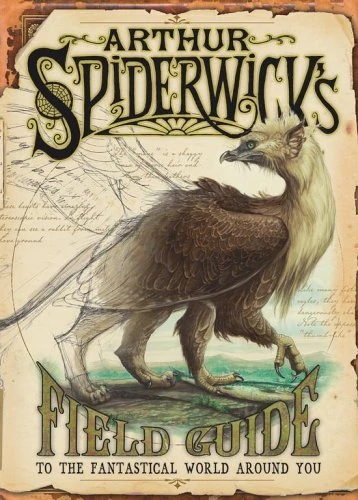
The kids soon realized both stories were about fairies, and not the sweet little Disney kind. These fairies had serious issues and the characters became entangled with the fairy worlds created by the authors. We used Arthur Spiderwick's Field Guide To The Fantastical World Around You. We searched the colorful pages and found the fairies mentioned in both books. The kids were quite surprised to discover a fairy from 13 Treasures in a Spiderwick Field Guide.
Then the kids noticed more similarities. One girl asked, "Did the author of 13 Treasures remake the first Spiderwick book?" I had no answer for her except, "I bet she read them, yes."
Another topic popped up. Action! The kids enjoyed the action from The Nixie's Song more than from 13 Treasures. Now, don't get me wrong, the kids enjoyed both books. But I noticed they listened better and remembered more of The Nixie's Song because it was written with a good exchange of dialogue and simple words they understood. 13 Treasures vocabulary was a bit above them and they lost some of the plot in the long narrative.
Each week I pulled several vocabulary words from each book and posted them without definitions. I love playing word games and I asked each kid to select a word they wanted to know more about. Many of the words came from the 13 Treasures side of the board. They wanted to know what these big words meant.
Next week will be our final day of the program. We will play a game I made up for them. It's a bit like Jeopardy. We will have seven categories: three about The Nixie's Song: characters and plot, fairy mischief and vocabulary. We will have the same for 13 Treasures. The seventh category is UP 4 GRABS, mostly questions about the crafts and activities we did in the previous weeks.
Each week I encouraged the kids to take out any of the three books to read. So far, nearly everyone has taken home Arthur Spiderwick's Field Guide, only a handful have taken The Nixie's Song, and no one has ventured to take 13 Treasures. I'm still hopeful they will be intrigued enough to check out one of these great books. This is the first time we have not read a whole book together. I hope with a bit more encouragement a few more will be tempted into reading one or both of the books.
So in running this program, I learned a few things to help my own writing. Using big words does not enhance the story. I knew this already, but it proved to be a good reminder. I was also reminded not to have page after page of narrative. Folks tend to skim over these parts and I want my readers to read each sentence.
Writers need to keep the plot moving and the characters growing and learning.
Even in children's books!
Til next time ~
DL Larson
www.DLLARSON.com
The kids soon realized both stories were about fairies, and not the sweet little Disney kind. These fairies had serious issues and the characters became entangled with the fairy worlds created by the authors. We used Arthur Spiderwick's Field Guide To The Fantastical World Around You. We searched the colorful pages and found the fairies mentioned in both books. The kids were quite surprised to discover a fairy from 13 Treasures in a Spiderwick Field Guide.
Then the kids noticed more similarities. One girl asked, "Did the author of 13 Treasures remake the first Spiderwick book?" I had no answer for her except, "I bet she read them, yes."
Another topic popped up. Action! The kids enjoyed the action from The Nixie's Song more than from 13 Treasures. Now, don't get me wrong, the kids enjoyed both books. But I noticed they listened better and remembered more of The Nixie's Song because it was written with a good exchange of dialogue and simple words they understood. 13 Treasures vocabulary was a bit above them and they lost some of the plot in the long narrative.
Each week I pulled several vocabulary words from each book and posted them without definitions. I love playing word games and I asked each kid to select a word they wanted to know more about. Many of the words came from the 13 Treasures side of the board. They wanted to know what these big words meant.
Next week will be our final day of the program. We will play a game I made up for them. It's a bit like Jeopardy. We will have seven categories: three about The Nixie's Song: characters and plot, fairy mischief and vocabulary. We will have the same for 13 Treasures. The seventh category is UP 4 GRABS, mostly questions about the crafts and activities we did in the previous weeks.
Each week I encouraged the kids to take out any of the three books to read. So far, nearly everyone has taken home Arthur Spiderwick's Field Guide, only a handful have taken The Nixie's Song, and no one has ventured to take 13 Treasures. I'm still hopeful they will be intrigued enough to check out one of these great books. This is the first time we have not read a whole book together. I hope with a bit more encouragement a few more will be tempted into reading one or both of the books.
So in running this program, I learned a few things to help my own writing. Using big words does not enhance the story. I knew this already, but it proved to be a good reminder. I was also reminded not to have page after page of narrative. Folks tend to skim over these parts and I want my readers to read each sentence.
Writers need to keep the plot moving and the characters growing and learning.
Even in children's books!
Til next time ~
DL Larson
www.DLLARSON.com
Wednesday, March 25, 2015
The Race Is On!
I'm doing my utmost to get Easter Basket ready before Easter, so I haven't been blogging much.
If I miss my deadline, I may need to change the title and make the book a Mother's Day one instead.
Time will tell! So far, this is what it looks like, unless I have to change the title!
Now, back to work on my book!
Find all of Morgan Mandel's romances and mysteries at
her Amazon Author Page:
http://www.amazon.com/author/morganmandel
Connect on Facebook:
http://www.facebook.com/morgan.mandel
Twitter: @MorganMandel
If I miss my deadline, I may need to change the title and make the book a Mother's Day one instead.
Time will tell! So far, this is what it looks like, unless I have to change the title!
Now, back to work on my book!
Find all of Morgan Mandel's romances and mysteries at
her Amazon Author Page:
http://www.amazon.com/author/morganmandel
Connect on Facebook:
http://www.facebook.com/morgan.mandel
Twitter: @MorganMandel
Thursday, March 19, 2015
A Writing Retreat with Donald Maass! by DL Larson
Every time I take a writing class I feel I don't know a thing about writing. Someone changed the rules and everyone knew but me.
Once talking to other writers, I realized I was not alone with this feeling. Writing is a changing creature and if one expects to succeed, one must keep evolving too. Editors and publishers want a stronger, more involved story for readers. I believe all writers want this as well. We want our readers to become engaged with the story and characters. We want the reader to connect immediately with the protagonist.
We need to write the truth. If we don't give the reader the truth, what is the purpose of writing? We need to give the reader some deeper level of truth that resonates a connection with the characters. Truth moves us. Mr. Maass asked the class to write something from our life that would never be in our novel. He shared that this experience would most likely be something painful, hurtful or fearful. And much too personal to share. Then he told us ~ find a place in your story for your character to say that truth. When there is nothing left to lose, the truth comes out.
Another exercise was to write about a new experience we had. I wrote about my daughter having an emergency c-section. I hemorrhaged with each of my births and never quite got over that fear. I had already experienced a deep fear when my grandson was born too early. The fear nearly overwhelmed me. All turned out well and we were ever thankful for little Colton. Then it felt as if history repeated itself when my daughter had her son, Van. Except this time, the fear was for my daughter, her baby was fine. She was not. An eternity passed while we waited. Finally the doctor approached us. I couldn't breathe. My husband and I wilted against each other when our daughter was wheeled past us. I couldn't take my eyes off of her. Then I heard the doctor. Our daughter would be fine.
Mr. Maass told us to forget about safe writing. He asked if there was some place we could put our new experience in our WIP. I smiled, because I already have. So I have done something right after all!
Another topic we discussed was the saggy middle of the story. Many writers neglect this part of their story. It's an important part of any novel and needs attention just as the beginning and end. The middle needs to have surprises and twists. The POV character is going through experiences. These experiences need to be not only truthful, but self-awareness needs to evolve through whatever fear, abandonment, puzzlement the protagonist is involved in. The inner journey the character struggles with is changing and we as writers need to reveal this in new ways.
Here's an example: Her guts twisted in agony. Delete that. In its place write the experience of the emotion so the reader's gut twists instead. Have the reader experience something they were not expecting. The intention is to stir up the inner emotions of the reader, not the character. Micro tension best describes this procedure. Tight emotions revealed on the page capture the readers empathy and they want to read more. They won't skim through the paragraphs waiting for more action. They will want to read every sentence. Neon emotions don't work. Writers need to give the reader the experience of the emotion they want to share.
We covered so many other topics in this workshop, I hope to share more with you another time. But I will leave you with a questionnaire to ask your POV character:
Good Luck!
Til next time ~
DL Larsonwww.DLLARSON.com
PS: for those interested: Donald Maass has writing books to help you develop your writing skills. The one he used for our class: Writing 21st Century Fiction.
Donald Maass
Donald Maass Literary Agency
Once talking to other writers, I realized I was not alone with this feeling. Writing is a changing creature and if one expects to succeed, one must keep evolving too. Editors and publishers want a stronger, more involved story for readers. I believe all writers want this as well. We want our readers to become engaged with the story and characters. We want the reader to connect immediately with the protagonist.
We need to write the truth. If we don't give the reader the truth, what is the purpose of writing? We need to give the reader some deeper level of truth that resonates a connection with the characters. Truth moves us. Mr. Maass asked the class to write something from our life that would never be in our novel. He shared that this experience would most likely be something painful, hurtful or fearful. And much too personal to share. Then he told us ~ find a place in your story for your character to say that truth. When there is nothing left to lose, the truth comes out.
Another exercise was to write about a new experience we had. I wrote about my daughter having an emergency c-section. I hemorrhaged with each of my births and never quite got over that fear. I had already experienced a deep fear when my grandson was born too early. The fear nearly overwhelmed me. All turned out well and we were ever thankful for little Colton. Then it felt as if history repeated itself when my daughter had her son, Van. Except this time, the fear was for my daughter, her baby was fine. She was not. An eternity passed while we waited. Finally the doctor approached us. I couldn't breathe. My husband and I wilted against each other when our daughter was wheeled past us. I couldn't take my eyes off of her. Then I heard the doctor. Our daughter would be fine.
Mr. Maass told us to forget about safe writing. He asked if there was some place we could put our new experience in our WIP. I smiled, because I already have. So I have done something right after all!
Another topic we discussed was the saggy middle of the story. Many writers neglect this part of their story. It's an important part of any novel and needs attention just as the beginning and end. The middle needs to have surprises and twists. The POV character is going through experiences. These experiences need to be not only truthful, but self-awareness needs to evolve through whatever fear, abandonment, puzzlement the protagonist is involved in. The inner journey the character struggles with is changing and we as writers need to reveal this in new ways.
Here's an example: Her guts twisted in agony. Delete that. In its place write the experience of the emotion so the reader's gut twists instead. Have the reader experience something they were not expecting. The intention is to stir up the inner emotions of the reader, not the character. Micro tension best describes this procedure. Tight emotions revealed on the page capture the readers empathy and they want to read more. They won't skim through the paragraphs waiting for more action. They will want to read every sentence. Neon emotions don't work. Writers need to give the reader the experience of the emotion they want to share.
We covered so many other topics in this workshop, I hope to share more with you another time. But I will leave you with a questionnaire to ask your POV character:
- What does your protagonist most want?
- What does he/she want to avoid at all costs?
- What does he/she want to accomplish, no matter what?
- What is the one thing he/she needs to become?
- Who is the one person your POV character will never trust?
- Who is the person your POV character trusts the most?
Good Luck!
Til next time ~
DL Larsonwww.DLLARSON.com
PS: for those interested: Donald Maass has writing books to help you develop your writing skills. The one he used for our class: Writing 21st Century Fiction.
Donald Maass
Donald Maass Literary Agency
Subscribe to:
Posts (Atom)